
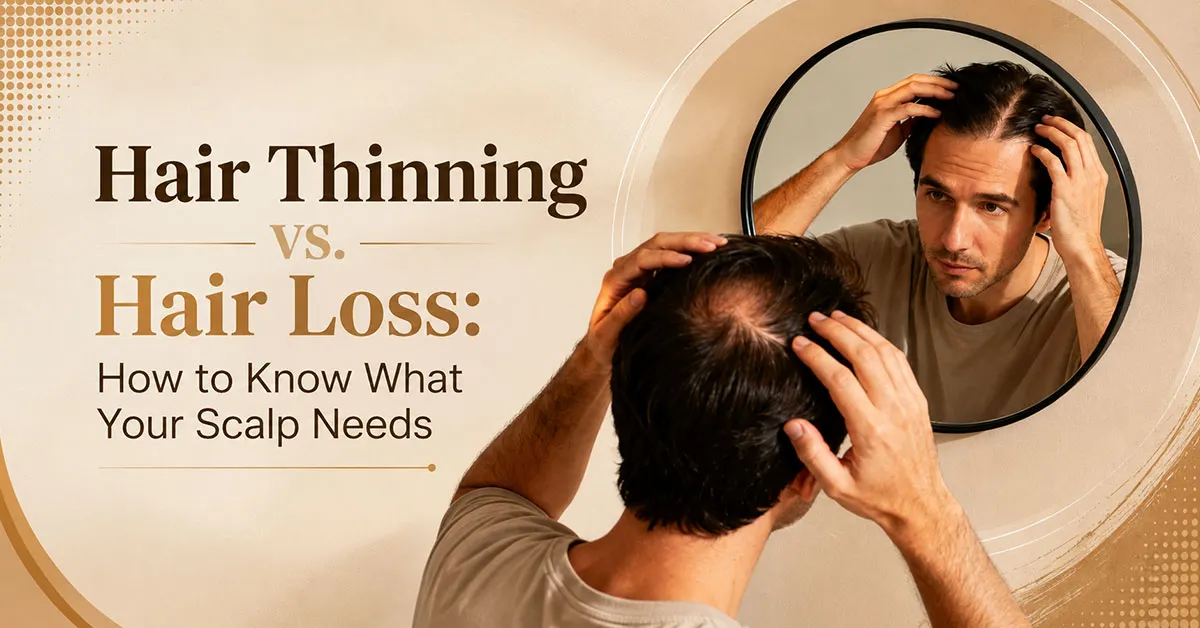
Thinning hair describes the process whereby your hair becomes thinner over time, while hair loss describes the loss of hair more drastically. There are several reasons why this occurs, including genetic factors, hormonal changes, stress, nutrition, and problems at the scalp. The first step towards the right treatment entails identifying both the pattern of your hair problem and its cause.
You notice hair on your bed, hairbrush or in the shower drain and it can be scary. Just because your hair is changing it does not mean you are losing hair. Thinning hair and lost hair are two things. If you know what is going on with your hair you will understand what is happening. When you need to see a doctor.
It is normal for hair to grow and then fall out. If your hair looks thin. There is something wrong with your scalp you should go see a specialist.
Hair Thinning: What is It?
When people talk about hair thinning, they usually mean that their hair is not as thick as it used to be. You might still have a lot of hair. Each strand is thinner, weaker and smaller.
One of the signs of hair thinning is when the part in your hair gets wider and you can see your scalp. Other signs include a ponytail or being able to see your scalp more easily especially on the top or front of your head.
Hair thinning can be caused by things like genetics getting older changes, in your hormones not eating well stress and being sick. Sometimes it happens slowly so you might not even notice it at first.
What is Hair Loss?
Hair loss means shedding to an excessive degree or a noticeable decrease in the amount of hair on the scalp. Different from ordinary daily hair shedding, considerable hair loss can be seen by the appearance of bald spots, a receding hairline, or a sudden change in hair density.
Hair loss may be temporary or progressive, the exact nature depending on the cause behind it. For instance, greater shedding can take place following a period of severe stress, illness, rapid weight change, or hormonal fluctuations. Conversely, various genetic types of hair loss can progress gradually if they are not dealt with.
That is the reason why merely counting the number of hairs you lose each day does not give you the whole picture; the pattern and length of the change are also important.
What Causes Hair Thinning and Hair Loss?
No single cause can be identified for every hair problem since your scalp and hair may be influenced by a number of factors at the same time.
Our genes are crucial for the state of our hair. If your ancestors had hair loss, you will probably have hair loss too. This is because things like feeling anxious, being stressed, not sleeping, having health problems or changing your routine can affect how your hair grows.
These things can make you lose hair faster than you normally would.
Your diet is also very important for your hair. If you eat food that has all the nutrients your body needs your hair will grow well. If you do not eat enough food or if your diet is not good, you will lose more hair.
The process of hair growth is influenced by hormone changes, since some conditions such as thyroid diseases, pregnancy, menopause and other hormone shifts can disrupt the hair cycle.
Frequent heat equipment uses, tight hairstyles, various chemicals for hair and harsh hair products can lead to hair damage and significantly reduce its density.
So, you want to know how to figure out what your scalp needs.
The first thing you should do is pay attention to the changes, in your scalp do not ignore them.
You should ask yourself these questions:
- Has your hair become noticeably thinner lately?
- Is your hair falling out more than usual?
- Has your hairline changed?
- Is the gap in your separation growing?
- Do you see bald spots?
- Is your hair breaking easily?
Have you recently suffered stress, got ill, undergone changes in weight, or made changes to your diet?
They will enable you to tell if the problem you are facing is primarily one of increased shedding, gradual thinning, or hair breakage.
It isn’t always possible to work out the cause by simply looking at your hair. A dermatologist or a qualified hair specialist could examine your scalp, get an understanding of your medical and lifestyle history, and suggest the necessary investigations if they were needed.
When Should You Go See a Hair Specialist?
You should get help from a hair specialist if your hair keeps falling out for weeks you can see that your hair is getting thinner, you notice bald spots or your hairline is changing.
Early evaluation is useful since different causes call for different methods. There is not a single best hair treatment that suits everybody. The appropriate course of action will depend on the reason why your hair is thinning or falling out initially.
The physician may recommend changes to the patient’s lifestyle, medical procedures, topical treatments or a combination of all the things mentioned above depending on the diagnosis. To have our hair in a healthy state, we need to discover what the core issue is that is causing the problem rather than just focusing on what we can observe.
How Do We Achieve Healthy Hair?
The way we live our life is important. It is worth trying to eat proper food, get enough sleep control stress and avoid hairstyles that pull on hair roots.
When styling, we are advised not to use too many heat tools. Strong chemical treatments should be avoided as much as possible.
Finest Hair Loss Treatment in Gurgaon
Live in Gurgaon and want to save your hair from falling? Ulia might help you solve this issue. They can treat your hair and scalp. The reason for hair fall needs to be identified first before finding a solution for it.
At Ulia they want to know what is going on with our hair and scalp. They will talk to you to figure out what you need. If your hair is falling out a lot or it is getting thin or do not have much hair as we used to, you should talk to someone who can help you with Hair Fall Treatment. They can tell you what all options are for Hair Fall Treatment at Ulia.
When we are looking for the hair fall treatment in Gurgaon we should not just pick something because everyone else is doing it. First we need to know what is going on with our scalp and hair. Then we can choose a Hair Fall Treatment plan that’s right for us, a plan that is good for our hair and scalp a good Hair Fall Treatment plan.
Final Thoughts: Understand Your Hair Before Choosing a Treatment
So, you want to know about your hair. Hair thinning and hair loss are not the thing. They have reasons for happening. It is okay to lose hair but if you keep losing a lot of hair or if your hair does not look as thick as it used to that is a problem. If you see more of your scalp than you used to that is also a sign. You should do something about it.
Rather than attempting to work out the solution, begin by understanding the condition of your scalp. A professional assessment can assist in identifying the possible cause and in putting together a treatment plan appropriate to your individual needs.
It’s not a matter of spotting a quick solution when it comes to having healthy hair; instead, you must get to know your scalp, pinpoint the root problem, and then carry on giving your hair the appropriate care.
Frequently Asked Questions
Q1. How is hair thinning different from hair loss?
Ans. Hair thinning refers to loss of hair density throughout time or hair strands becoming thinner, while hair loss describes excessive hair fall or hair shedding. The pattern and the reason for hair loss can indicate how to deal with it.
Q2. When to consult an expert about hair thinning or hair fall?
Ans. You should see a dermatologist or a hair expert if you can see your hair beginning to fall a lot for a few weeks or it’s obvious that you have less hair than you used to or you’re developing bald patches or your hairline is shifting.
Q3. Can lifestyle changes help reduce hair thinning and hair fall?
Ans. Yes, if you eat food and get enough sleep do not get too stressed and do not use heat on your hair or wear it in tight styles, your hair will be healthier. If you are losing hair for a long time, you should go see a specialist to figure out what is going on with your hair.