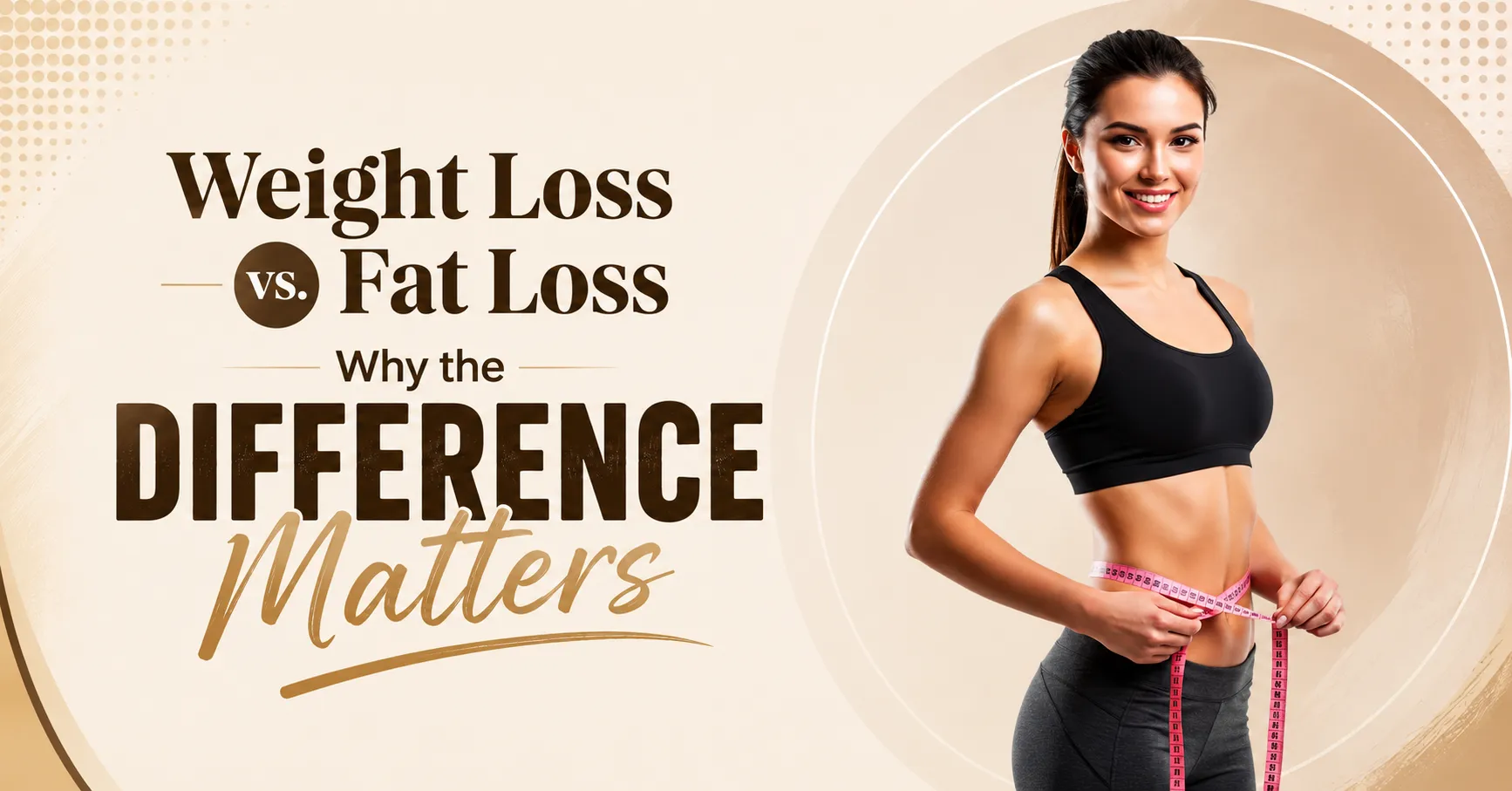
It’s important to understand the difference between weight loss and fat loss because you may not be losing fat simply because you lost some weight. When people lose weight, it could refer to losing a mix of water, muscle, fat or other body tissues, while the goal when people say fat loss is to reduce your body fat to get a more beneficial body composition.
What is Weight Loss?
Weight loss is the loss of the total amount of anything in your body. When you hop on the scale and see the number decrease, you know you have lost weight of what’s in there – fat, muscles, water, even the contents in your intestines.
The scale at your house doesn’t have X-rays to indicate whether you lost water, muscles or fat. For instance, when you start following a low-calorie diet, the first few kilos often disappear quickly. This, however, may be the loss of water and the depletion of carbohydrates stored in the body, rather than loss of fat. A highly restrictive diet may not only result in fat loss but also loss of muscles.
Therefore, you shouldn’t base all your progress on that number on the scale, particularly if your goal is to change your body’s structure.
What is Fat Loss?
Fat loss is purely dedicated to decreasing stored body fat. As opposed to just general weight loss, body fat reduction aims to improve body composition and to lose excess body fat without losing lean muscles. By following an efficient diet and fitness program, our body turns stored fat into energy, helping our bodies turn leaner over time.
Fat loss is often accompanied by getting smaller measurements, changes in your body shape, or loose-fitting clothes.
There may be cases where your weight doesn’t change much, yet you find that you have lost a couple of inches in waist, hips or waist because of fat loss combined with maintenance of lean body mass.
Weight Loss vs. Fat Loss: What’s the Difference?
To understand weight loss vs fat loss, it’s quite easy to focus on what the body lost. Weight loss includes loss of both fat, muscles, water and other body tissues. The body loses body fat if it’s fat loss.
When losing a kilogram to five kilos, you’re not necessarily losing the exact weight of your fat in kilos.
One may rapidly lose weight but also lose some water, and if we overexert ourselves physically or do not take sufficient proteins, may also lose muscles. Other may lose a little of it very slowly but surely.
If you intend to look fitter, build strength and to re-form your body to be more shredded, the concept of fat loss will benefit you more than simply aiming to be thinner.
Should We Worry About Losing Muscles During Weight Loss?
The loss of muscles during weight loss, which could occur due to restricted eating, fast weight loss, insufficient protein in meals, or absence of physical training with weights, should be taken seriously. As muscles play an integral role in maintaining physical strength, physical form, and physical fitness, loss of these could reduce strength, decrease metabolism and lead to a gain in lost weight after you discontinue dieting. In short, your objective shouldn’t be as few pounds as possible on the scale but to cut unwanted fat and maintain your muscles.
Can We Decrease Our Body Fat and Retain Body Weight or Even Gain Muscles?
Absolutely. Yes, it is possible to decrease the body fat of your body without decreasing your overall body weight; this also means that you can build more muscles or retain the same number of muscles in your body. This is called Body recompositing.
In other words, as opposed to tracking the scale, this approach takes into account the ratio of your body fat to your lean body mass.
After losing body fat and maintaining muscles, the way your clothes fit will look much better, and your body shape is altered. You can also trace progression by taking photographs of your body at regular intervals, taking body measurements, checking your strength levels, monitoring the level of your fitness and fitness progress or getting certified professionals to determine the body composition of your body.
Which Factors Contribute to Our Body Fat Reduction?
Several individual factors, such as age, genetics, degree of physical activity, diet, sleep quality, amount of stress, hormonal health and the general structure of your body, can influence how your body sheds excess fat. Eating routine and exercise is of paramount importance for any individual to make a body fat reduction plan. It also includes how healthy you stay; this includes regular sleep and adequate physical and mental relaxation.
No plan for dieting, exercise or bodybuilders, as such, delivers identical results for each person. It relies mainly on your personal state of wellbeing, condition, and habits.
How Can Lose Bodyfat?
The simplest approach that is highly recommended is to follow consistent healthy lifestyle habits for long-term fat loss. A healthy, nutrient-dense diet along with reasonable portion sizes, adequate protein, consistent physical exercise, and strength training are good for this purpose. The diet should adequately supply all nutrients that your body requires, and you must refrain from severe restrictions.
Engaging in an active and lively lifestyle, which includes activities such as walking, biking, playing, sports and strength training, also contributes positively toward your health goals.
Sleep and adequate rest should also be part of the plan to maintain optimal energy and consistency. A one-fits-all approach to calorie count, diet and exercise doesn’t exist as every individual requires a unique plan depending on age, gender, health profile, fitness and goals.
How Does Weight Management Help with Fat Loss?
Weight management not only helps with fat loss but also means to inculcate healthy habits for a lifetime, not a crash diet for losing weight, only to gain it back. Most people do manage to lose the required amount of weight and gain it back once more when they eat an unhealthy lifestyle or follow an extremely restrictive and problematic regime. Healthy weight control consists of slow steady and lasting improvements which can later develop into a lifestyle that includes healthy eating, maintaining an active profile, managing sleep in adequate times, stress management, monitoring bodyweight with consistency, thus maintaining a stable healthy body composition.
Can There Be Body Slimming Treatments?
In some circumstances, there are still pockets of fats that resist efforts made by even the most disciplined in terms of nutrition and exercises. In such cases, certain body contouring /body slimming treatments can be employed after having the right kind of consultation. If you are looking for the best body slimming treatment in Gurgaon, it is to be considered that these treatments are not a means for losing weight but are more to refine your shape in specific area of your body. So, after meeting and consulting the experts at Ulia for body slimming services, you will be well on your way to understanding about fat reduction by consulting professionals who are in the best position to give you advice that suits your specific needs and health concerns.
Frequently Asked Questions
Q1. What is the difference between weight loss and fat loss?
Ans. Weight loss refers to losing any body weight, which can consist of water, fat, muscle, or other. Fat loss entails losing body fat in the store and preserving muscle mass.
Q2. Is losing weight equal to losing fat?
Ans. No. You may not see the same quantity of fat loss just Because the weighing scale drops your total weight. Other things such as body water, glycogen, muscle also impact the weighing scales.
Q3. Is fat loss better than weight loss?
Ans. Should you wish to have a better body composition, lean muscles or to preserve muscles, concentrating on fat loss instead of bringing down number on the weight scale makes sense.
Q4. Can we reduce the body fat without shedding any of our body weight?
Ans. Yes. The process of body recompositing means you may put on or preserve muscle while you shed body fat. Consequently, your weight may not significantly change even Though you can find inches shed or your pants fit well.