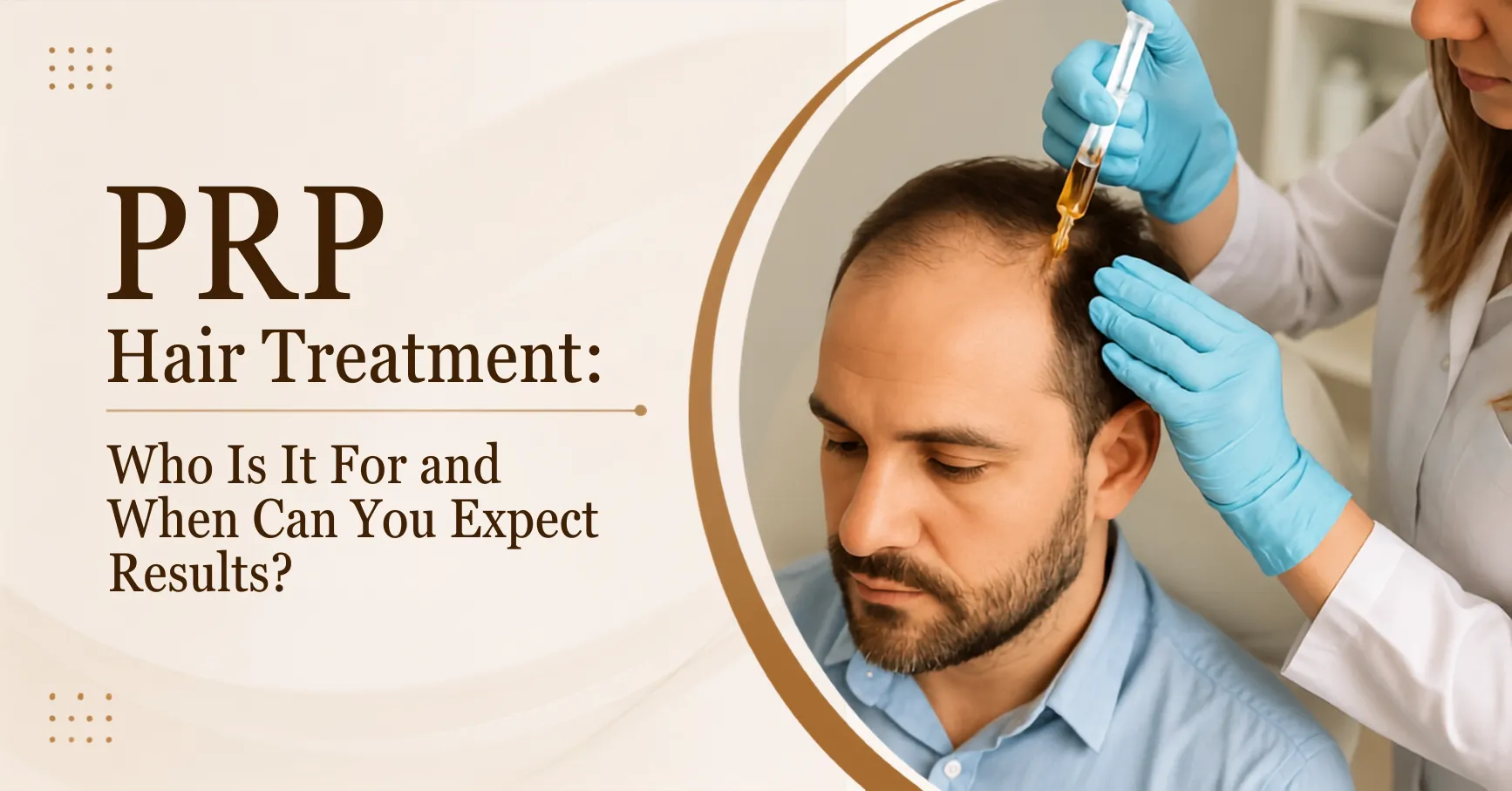
PRP hair treatment can be used by people with hair loss or certain types of thinning, where the follicles are still active. PRP is not and does not produce immediate results as it helps the existing follicles; improvements can typically be seen over 3 to 6 months (although it varies per individual and their response to the treatment).
Hair loss can be a worrying problem to deal with – perhaps it manifests as seeing excess hair left on your pillow/in your hairbrush after each day. However, there are several treatment options available today, Platelet Rich Plasma (PRP) is one example, but who is PRP for and exactly when does the procedure start to work?
What is PRP Hair Treatment?
PRP hair treatment is a procedure, which utilizes the body’s natural healing mechanisms through their own blood. In essence, to perform the treatment, a small quantity of blood is extracted from the patient and processed; to isolate the concentrated, platelet-rich portion of the blood before being re-administered to the scalp via small injections. It essentially uses the growth factors within the body, to support the health and activity of hair follicles that are present on the scalp.
A PRP hair treatment is distinct from hair restoration in that it does not involve removal or transplanting follicles, but it focuses on maximizing hair stimulation in already-present follicles.
At Ulia, Platelet Rich Plasma is used as part of a tailored hair rejuvenation plan, depending upon a person’s current hair situation, scalp health and aims.
Is PRP Hair Treatment Suitable for You?
PRP can be beneficial for men and women that are experiencing thinning or pattern hair loss, especially where the hair follicles have started to produce thinner hair or where shedding has been gradually increasing. The best candidates for PRP hair restoration would generally experience:
- Early to moderate hair loss
- Progressive loss of hair
- Thinner hair
- Weak follicles (that are likely still capable of regeneration)
Are looking for a minimally invasive treatment to address their hair thinning.
However, PRP therapy cannot replace a lost follicle that has been completely bald/ inactive for years. As such the hair loss and current condition of your hair and scalp, would be thoroughly examined beforehand, by a trained professional. Understanding the cause of hair loss is important when ascertaining if PRP may be a suitable treatment.
PRP Hair Treatment Benefits
Several PRP hair treatment benefits have made this a common non-surgical option for those struggling with hair loss, these include:
- Stimulation of existing hair follicles
- Visible improvement of hair thinning
- Healthier hair growth
- Thicker looking hair over time (in some cases)
Help reduction of increased shedding (where the condition dictates. It also provides great support for the health of the scalp). The main advantage is that only one’s own body fluids are utilized as part of the treatment-no additional substances and/or artificial follicle implants are used; however, patients should have a realistic frame of mind when undergoing the procedure as PRP will only go so far – everyone will react differently.
How Many PRP Sessions Will I Need?
It’s difficult to give an exact number as this depends on the individual. Most will undertake a series of procedures that span several weeks, the purpose of these sessions would be to encourage new, and stronger growth from your hair follicles. Subsequent maintenance procedures may be scheduled in line with their medical advice. You will have a fixed number that is useful for you in relation to hair loss/hair restoration pattern; consult with a specialist first to understand how best to treat your condition for the results you are looking for.
When Will I See the Results?
You will not see instant results! These grow with the hair growth cycle, so they appear quite gradually over time. Some clients report that they see decreased shedding as soon as the 2 nd month, others may not see any visible increase in density/thickness for up to six months due to variations in how hair cycles develop for each and every person.
Here are some factors which can impact your result timeframe; cause and stage of loss, strength and viability of follicles, a person’s diet and health.
Remember it is only supporting existing follicles.
PRP Hair Treatment – What is the Recovery Process Like?
PRP has minimum downtime; generally, it is possible to go back to your normal activities after leaving the clinic. Some might feel a slight tenderness to the scalp and/or sensitivity in certain areas after 24 hours though in most cases this will have gone soon after. There may be some redness and mild swelling also.
After the treatment your specialist would advise you on how and when to wash your hair and general activity.
To optimize the results, you must follow the instructions given at the time of your treatment, this is crucial for the speedy recovery of your PRP hair treatment procedure and to maximize results by keeping certain factors in account.
Is PRP the Right Treatment Plan For Me?
There are a multitude of reasons why one may be suffering from hair loss, including genetics, hormonal imbalances, a lack of key nutrients within the diet and the overall impact of one’s environment. Without ascertaining and assessing the root cause of the issue then how can the right treatment solution be chosen to solve the problem as best as it can be. When it comes to hair restoration treatment in Gurgaon, if PRP seems like a possible option discuss it further with a professional who can carry out in-depth checks on your hair and scalp.
A thorough consultation would help you gain an insight into how a treatment course might help you to address hair loss based on your particular circumstances.
At Ulia it’s personalized and takes each person’s hair growth concerns into account. Final Thoughts on PRP Hair Treatment
PRP Hair Treatment can be an option of support when individuals are suffering with specific hair loss issues. Over a period, it offers support to one’s existing hair follicles and also encourages healthier looking hair. However, it is important that it is understood that PRP isn’t a magic treatment- it should be seen as something that works in conjunction with healthy living and should only be conducted upon after a medical professional has confirmed that it’s the right hair restoration procedure for you. Professional consultation will enable them to offer their best opinion and, hopefully, achieve your hair restoration goals.
Q1. When will I start to see results of the PRP hair treatment?
Ans. Results may differ from individual to individual. Some patients may start to see less shedding within 1–3 months, with more significant visual results (increased thickness and density of hair) in about 3–6 months based on the recommended schedule of treatment.
Q2. How many times is PRP for hair loss performed?
Ans. The number of treatments required depends on your type of hair loss, cause of hair loss, scalp health, the individual’s response to treatment. A hair specialist will advise your suitable schedule for treatments which normally includes multiple treatments and then maintenance treatment at certain interval.
Q3. PRP hair treatment for everybody that loses hair?
Ans. No. PRP may be a suitable option for people with mild to moderate hair loss where the hair follicle is still present and active. It may provide limited results to bald area and inactive follicles present long time ago. A proper assessment can reveal to you if it is suitable for you.